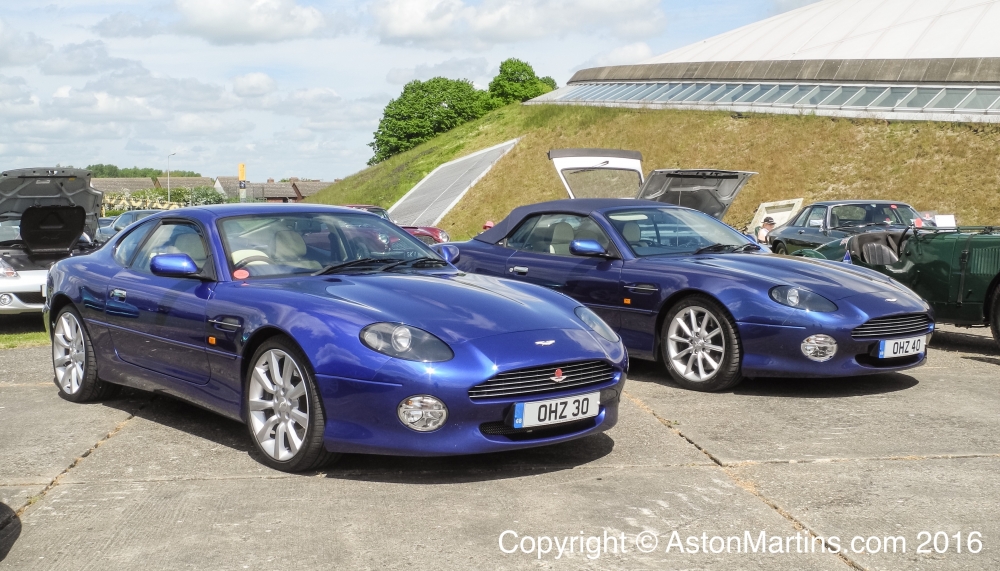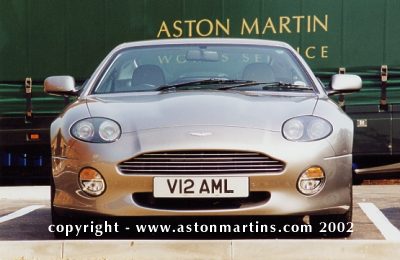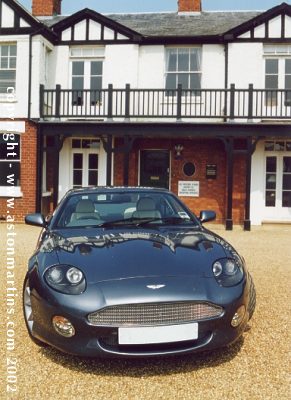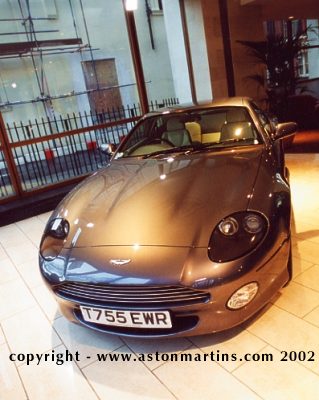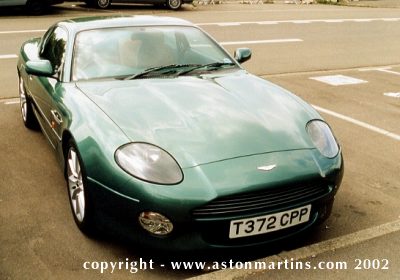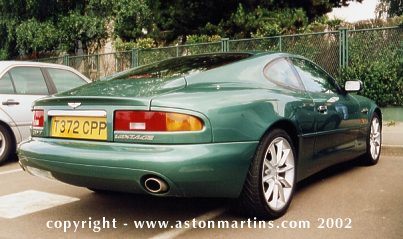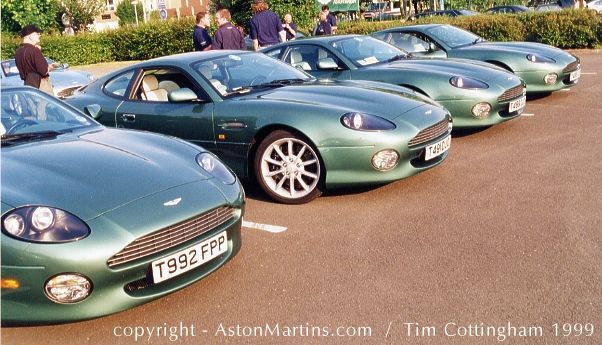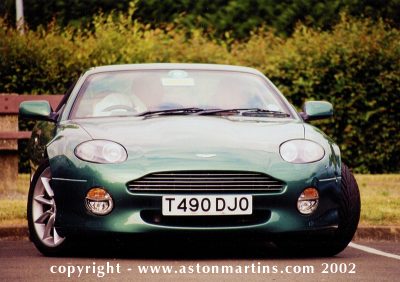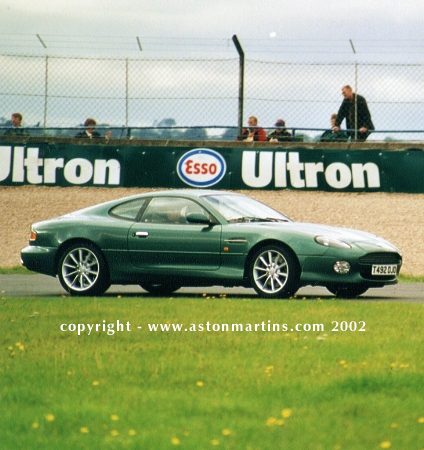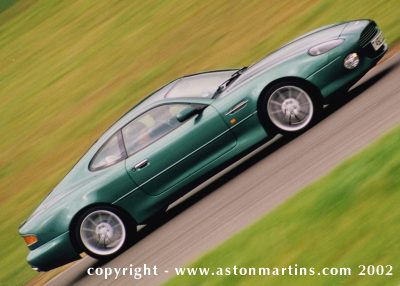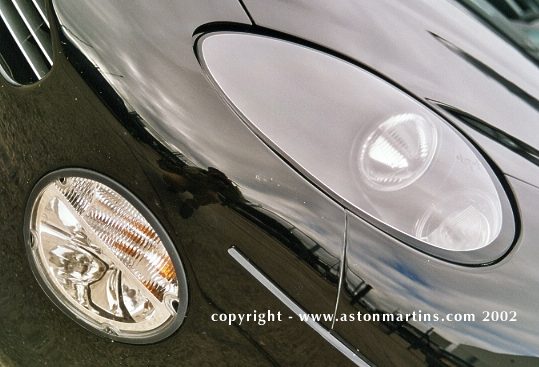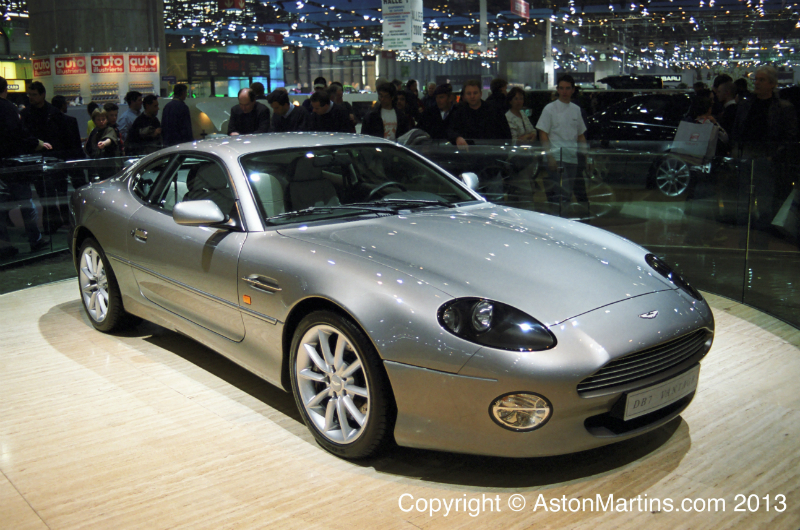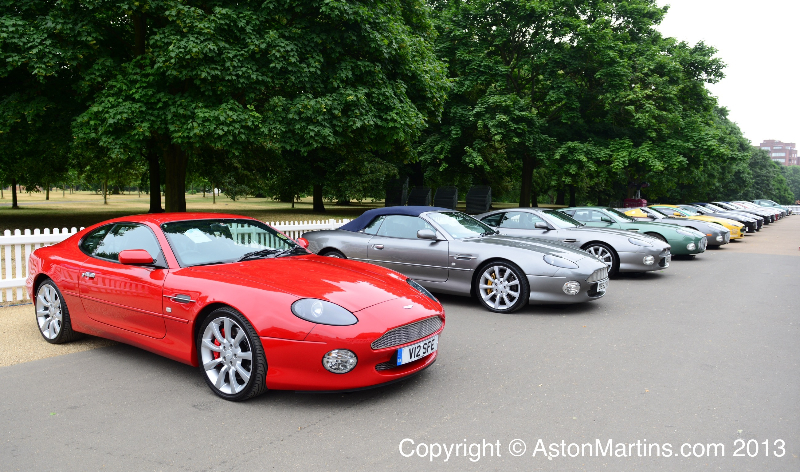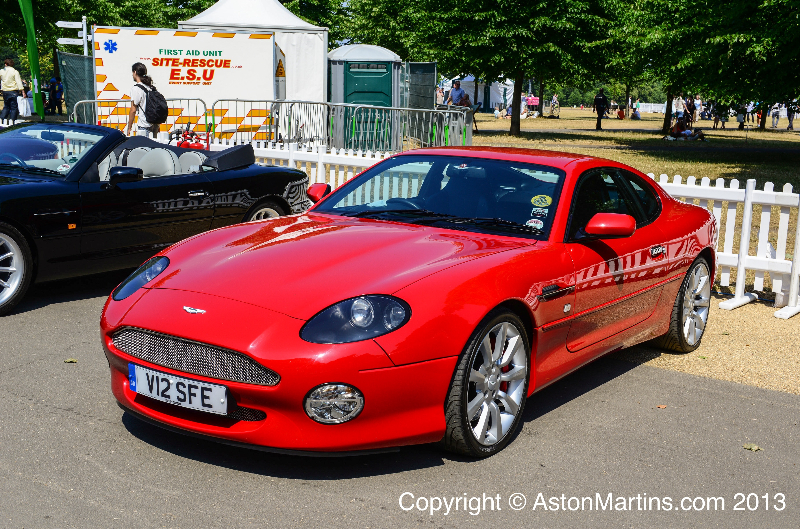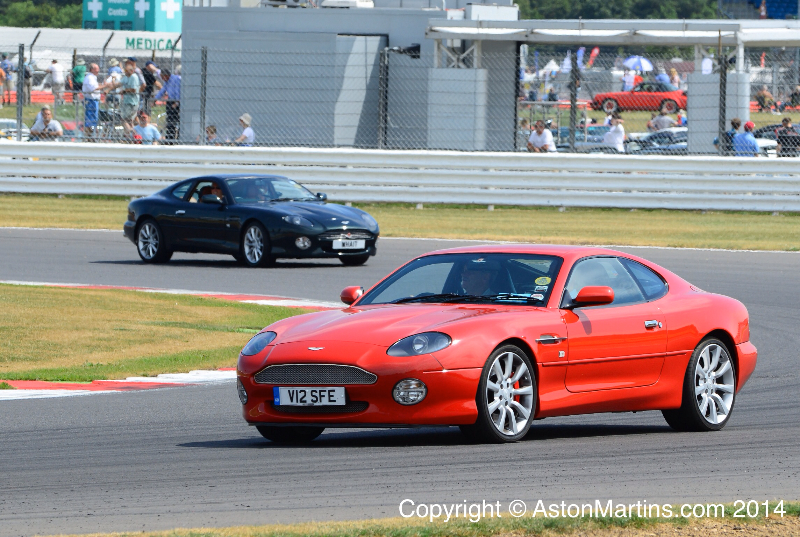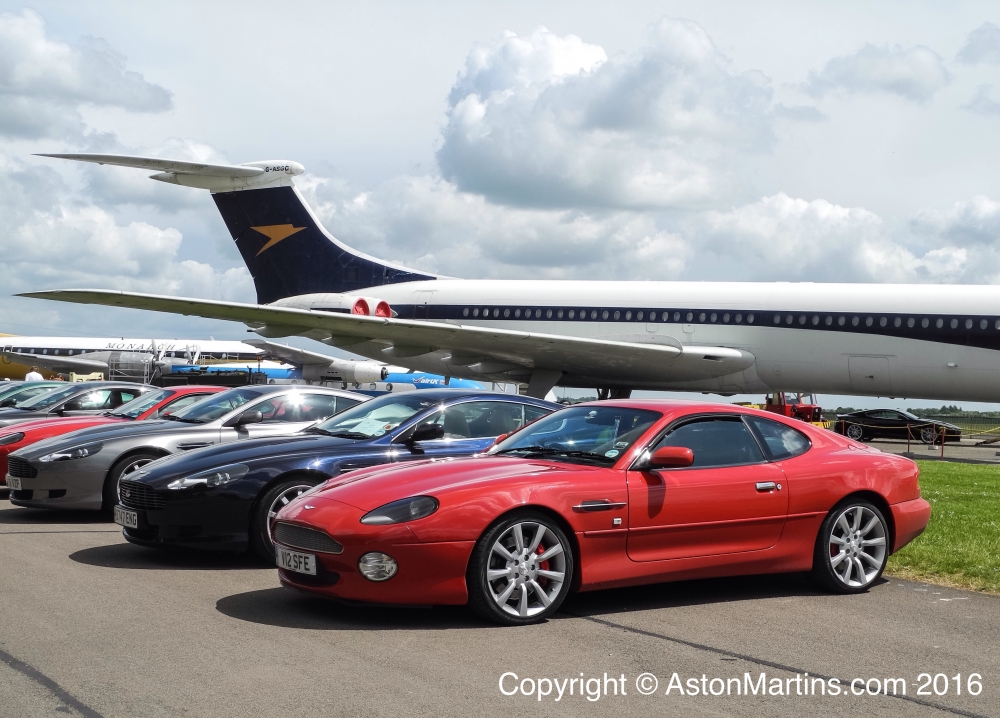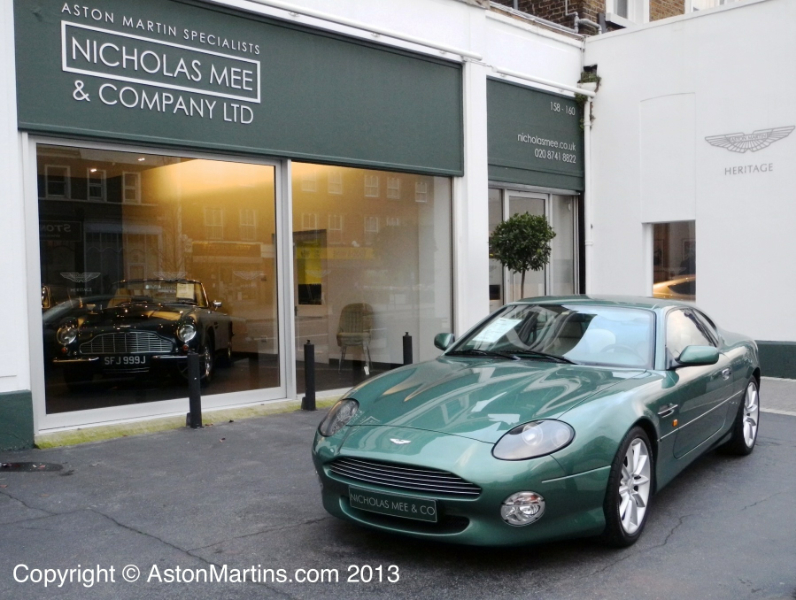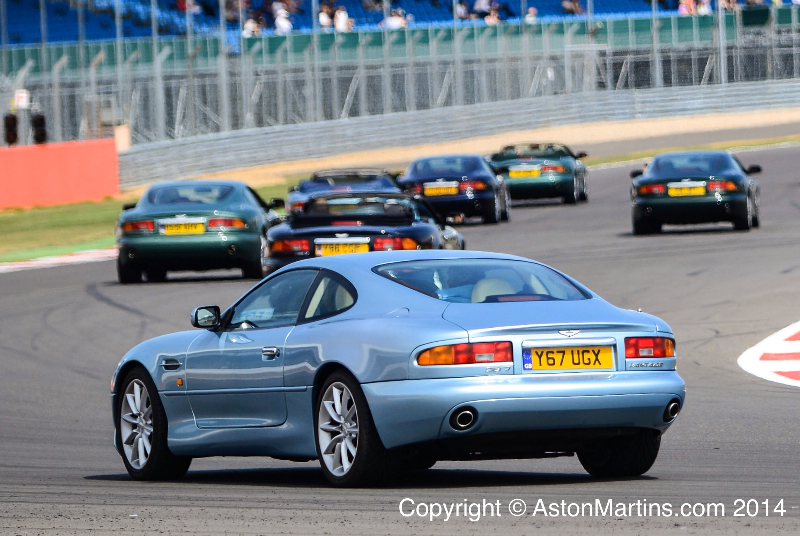


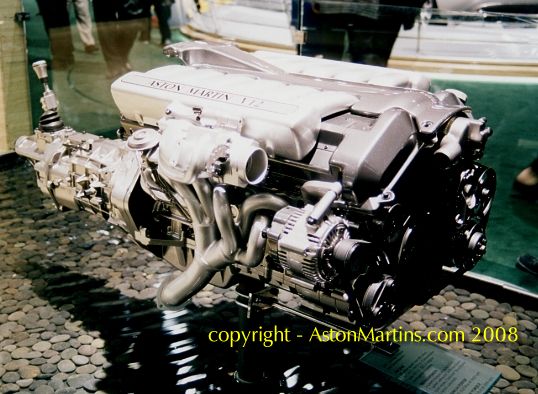
 To the left is a display version engine from the DB7 Vantage, the first of a totally new generation, destined to became the future of Aston Martin during the first decade and a half of the 21st century. For the DB7 Vantage, the 5.9 litre, 48 valve, all-alloy, 60º V12 engine delivered 420 bhp and 400lbs ft of torque. Developed in close co-operation with the Ford Research and Vehicle Technology Group and Cosworth Technology, the V12 was designed to operate at a maximum speed of 7000rpm, features four valves per cylinder, twin overhead camshafts for each bank of cylinders and a sophisticated Visteon electronic management system. To cope with the massive increase in power, much of the chassis and suspension was extensively modified together with larger Brembo brakes.
Initially the car was available with either a six speed close ratio manual transmission (184 mph top speed, 0 to 60 mph in 5.0 seconds) or a five speed automatic (limited to 165 mph top speed, 0 to 60 mph in 5.1 seconds). From 2000, a highly acclaimed ‘Touchtronic’ system became available, developed in conjunction with ZF. The system has three transmission modes available to the Vantage driver. As well as a standard ‘automatic’ mode there is also a ‘sports’ mode where up changes were made at higher engine speeds. But drivers could also select ‘touchtronic’ mode which is a sequential manual mode. Gears can be changed by either moving the gear lever back and forth or by using ‘+’ and ‘-‘ buttons on the steering wheel.
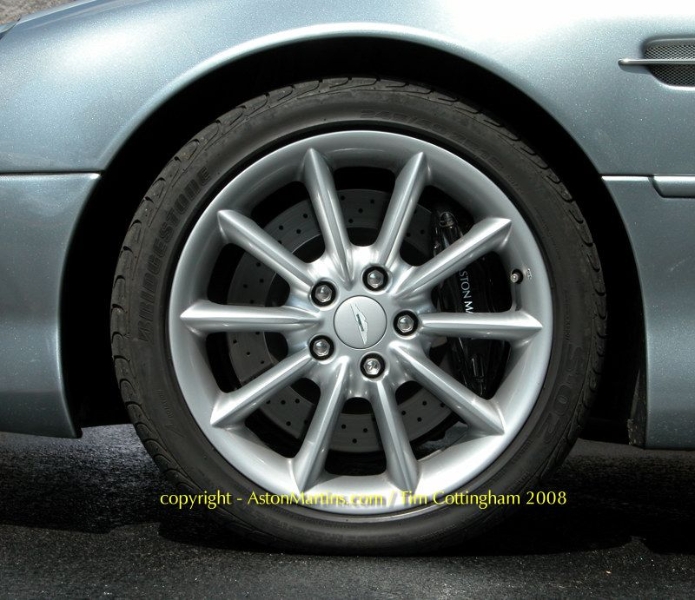
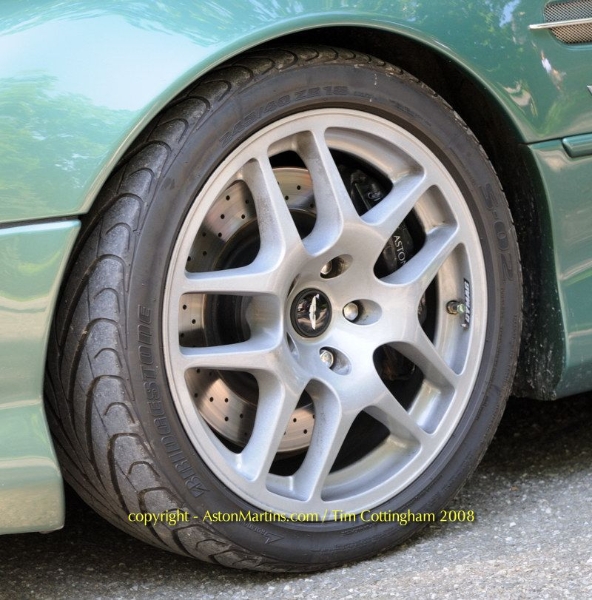
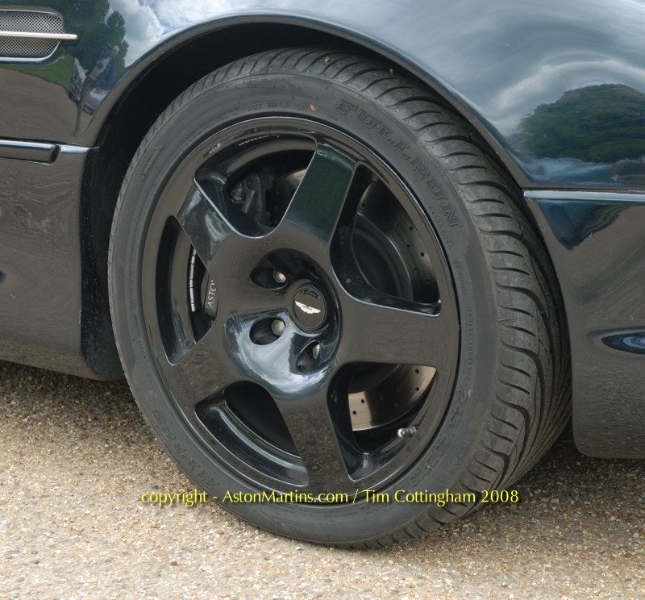
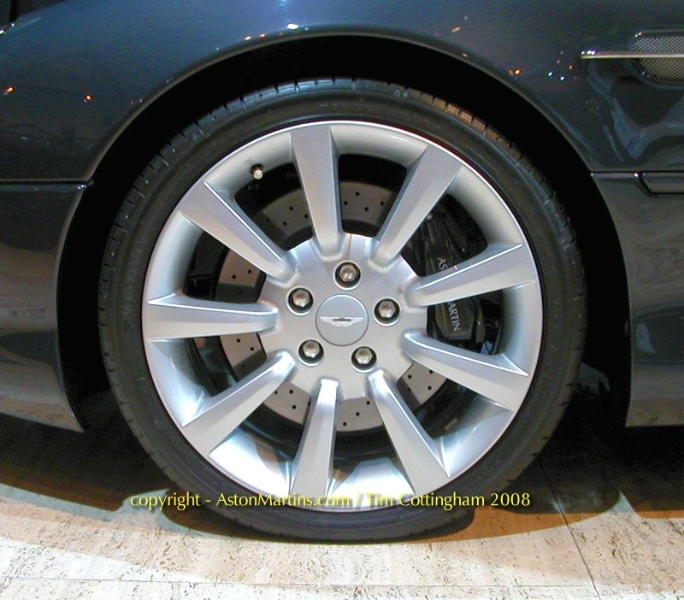
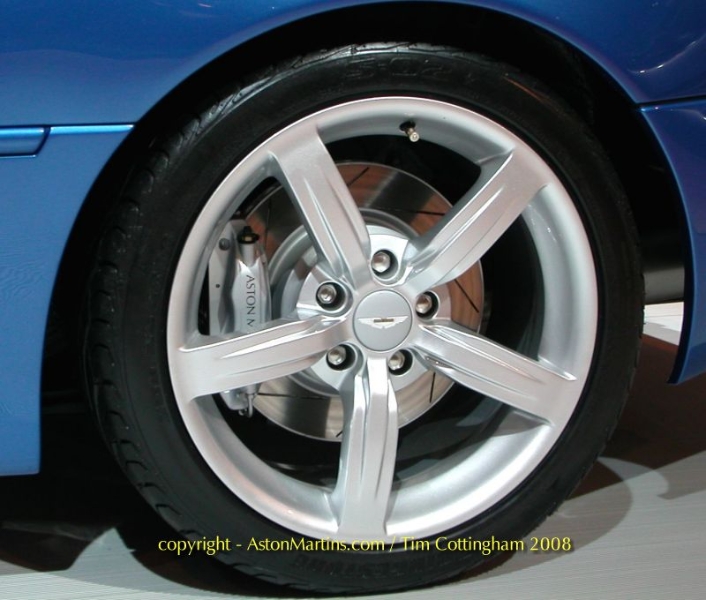
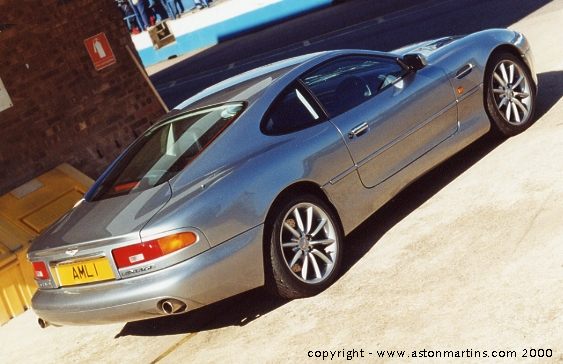
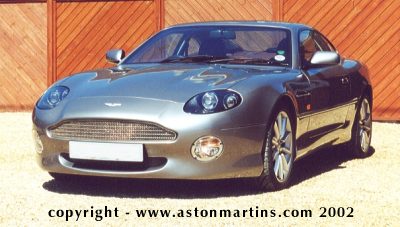
The images above illustrate the possible approved wheel options for the V12 DB7. The first image shows the standard 18 inch diameter, 10 spoke item. The second image shows the 18 inch 10 spoke ‘classic’ magnesium Dymag introduced in 2000. Dymag also make an 18 inch chunky 5 spoke design, known as ‘sport’ – perhaps the rarest DB7 wheel seen here finished body colour. The fourth image shows the 19 inch, 9 spoke design first offered in late 2001 for the 2002 model year. Lastly it is also possible to see V12 Vantages with the 18 inch 5 spoke wheel as fitted as standard to the V12 GT.
Below is the very last DB7 ever, which was completed by December 2003. It’s a right hand drive V12 Vantage coupe, chassis number 304458, finished in Aston Martin Racing Green. The car is being retained by the factory as it is occasionally displayed at the customer reception area at the Gaydon factory.
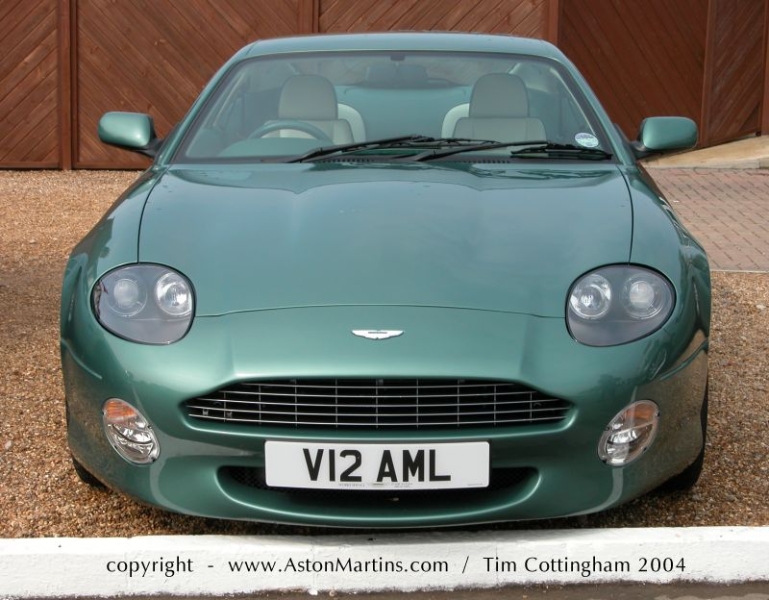
Total DB7 Vantage coupe production reached 2091 cars during four and a half years of building at the Bloxham site, which, together with the Volante and GT was an all time record for an Aston Martin model. The DB7 was replaced by the DB9 coupe in 2003.